On-Demand vs Traditional Self Storage in Saudi Arabia
On-demand vs traditional self-storage in Saudi Arabia: compare costs, access, flexibility and security to find the right fit for your home or business.
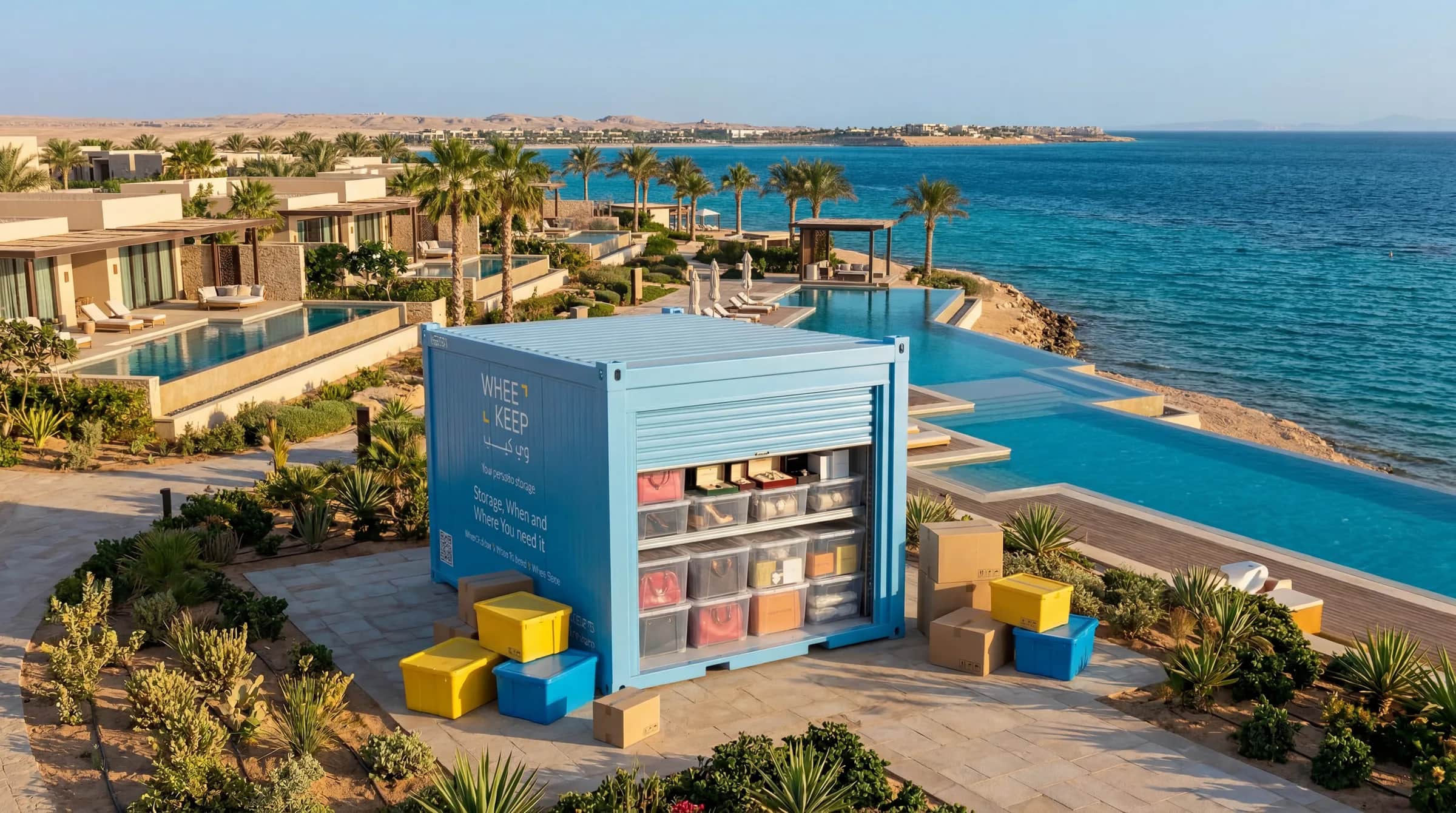
Here is a scenario that plays out regularly across Riyadh, Jeddah, and Dammam: a family relocating from Al Olaya to a new district discovers their new apartment is ready three weeks before their lease ends. They have furniture, boxes, appliances, and a collection of items too valuable to discard but too bulky to leave at a relative's home. One option is renting a traditional self-storage unit. Another is booking an on-demand storage service. Both promise to solve the problem. Neither, however, is right for every situation.
The Saudi storage market has grown considerably alongside Vision 2030's urbanisation drive, the expansion of giga-projects like NEOM and Diriyah Gate, and the steady influx of expatriates and domestic migrants moving between cities. That growth has created a genuine choice between two distinct models: on-demand storage, where a provider collects, warehouses, and returns your items; and traditional self-storage in Saudi Arabia, where you rent a physical unit you can access yourself. Both have real advantages and genuine limitations. This comparison cuts through the marketing to give you a clear picture of which model suits which situation, so you can make a confident decision without regretting it three months later.
What On-Demand Storage Actually Means (and What It Doesn't)
On-demand storage is a model where the storage provider comes to you, collects your items, transports them to a centralised warehouse, and returns them when requested, typically through an app or website. You never visit a facility. You never load a van. You photograph your belongings through an app, schedule a pickup, and wait.
The concept is convenient in its purest form. For someone living in a compact apartment in Jeddah's Al Hamra district who needs to store a seasonal wardrobe, a few boxes of books, or sports equipment during summer, the model removes the logistical effort entirely. You do not need a car large enough to transport a sofa. You do not need to navigate the industrial zones where many storage facilities are located. The service comes to your door.
However, on-demand storage carries constraints that are rarely front-paged in marketing materials. The most significant is access. When your belongings are at a third-party warehouse, retrieval requires scheduling, lead times of 24 to 72 hours in most cases, and in some instances a per-item return fee. If you suddenly need a document from a stored archive box at 20:00 on a Wednesday, you cannot simply drive over and retrieve it.
Pricing structures for on-demand storage tend to be per-item or per-box, which creates hidden cost escalation as inventory grows. A family storing the contents of a three-bedroom villa in Al Nakheel, Riyadh, could find the per-item fees accumulating into a sum far higher than renting storage units outright. The model is genuinely well-suited for light, low-frequency storage needs. It becomes economically inefficient when volume increases.
There is also the matter of trust and visibility. With on-demand storage, your items leave your sight and enter a shared warehouse environment. While reputable providers catalogue items photographically, the process is inherently less transparent than walking into your own locked unit and confirming everything is exactly where you left it.
How Traditional Self-Storage in Saudi Arabia Works
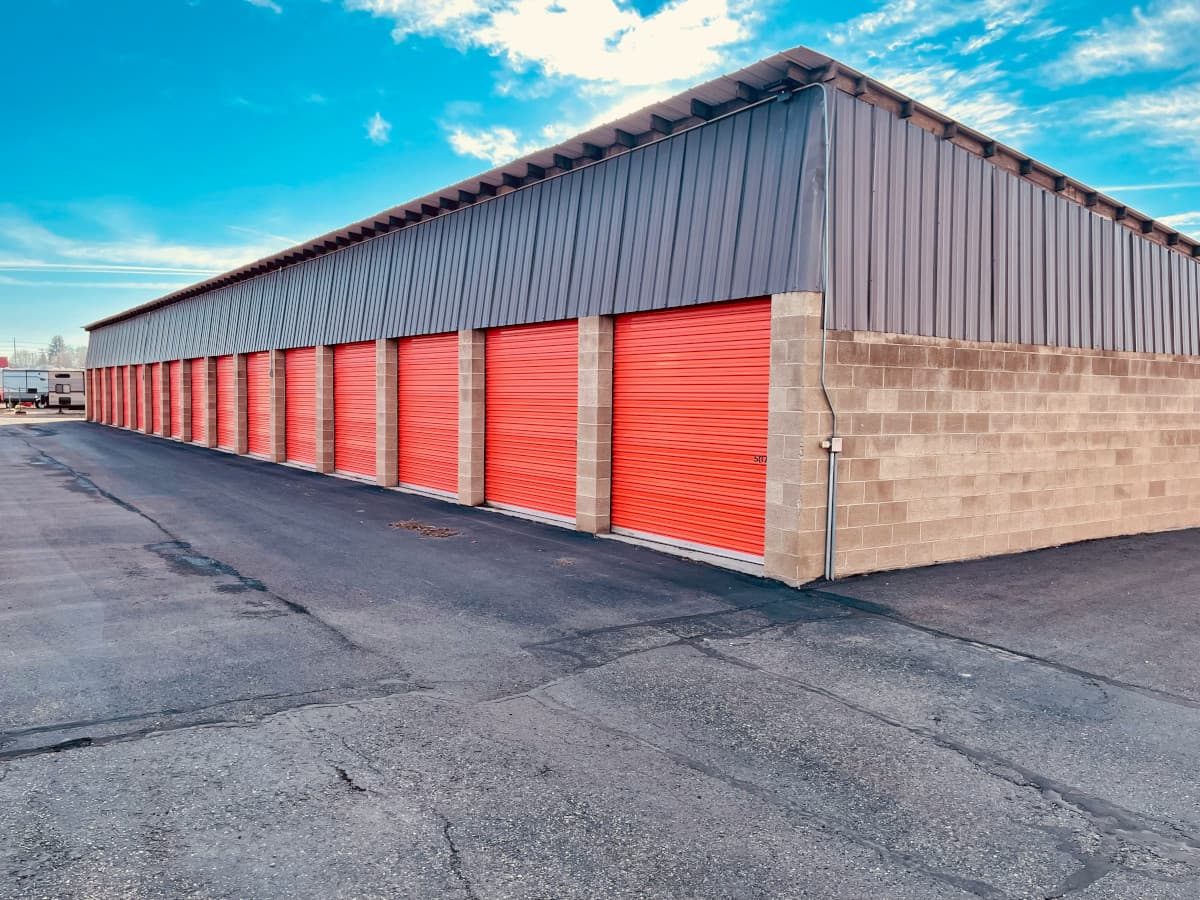
Traditional self-storage gives you a physical, lockable unit inside a secured facility. You pay a monthly rental fee, you hold the key (or access code), and you can visit your unit during operating hours whenever you need to retrieve, add, or reorganise items. The model has been the global standard for personal and commercial storage for decades, and its staying power is rooted in a simple value: control.
In Saudi Arabia, self-storage facilities are now positioned across major urban centres. This geographic distribution matters enormously in a country where distances between neighbourhoods can be substantial and where peak-hour traffic in cities like Riyadh can turn a 10-kilometre drive into a 45-minute journey.
The physical unit model is particularly well-suited to the Saudi context for several reasons:
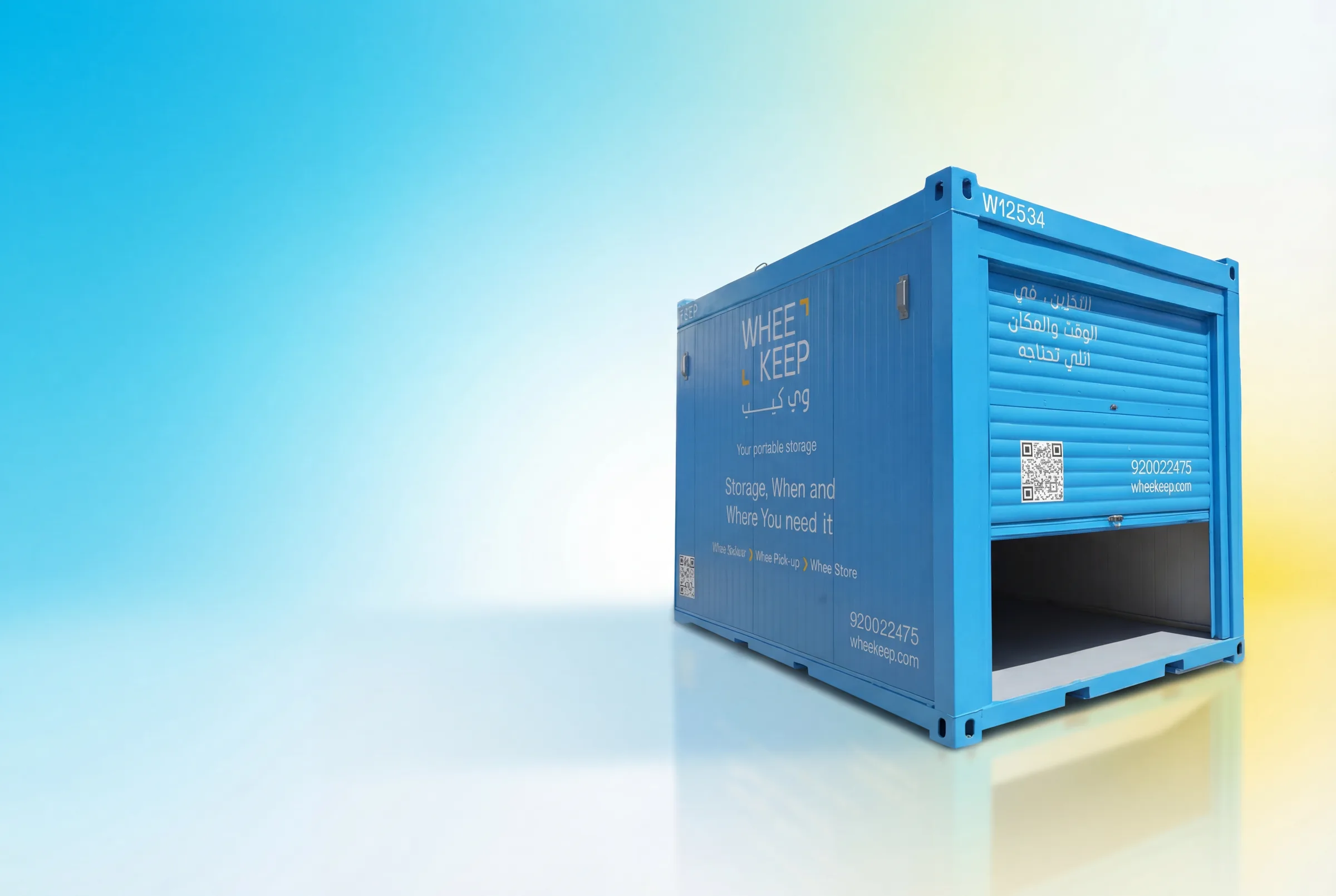
- Volume flexibility: Unit sizes range from compact options suited to a few boxes up to large units capable of housing the full contents of a furnished apartment. WheeKeep's range covers a small unit at 2.4×1.5×2.35 metres (SAR 599/month), a medium unit at 3.6×1.5×2.35 metres (SAR 899/month), and a large unit at 3.6×2.4×2.5 metres (SAR 1,289/month).
- Access by appointment within operating hours: no fee to visit your unit at the facility, and 99 SAR before VAT, the round trip, to have it brought to you. You drive up, unlock your unit, and access whatever you need.
- Transparent security: CCTV coverage, individual padlocks, and physical access control are standard features. You can see the security infrastructure operating in real time.
- No per-item billing: The cost is flat per month for your unit, regardless of whether you store 20 boxes or 200 boxes (within the unit's capacity).
For businesses, the self-storage model is particularly practical. An e-commerce seller based in Riyadh managing inventory for Noon or Amazon.sa fulfilment, or a contractor working on a construction project in the Eastern Province, needs reliable access to stock or equipment without the overhead of a commercial warehouse lease. A medium or large self-storage unit provides that flexibility at a fraction of commercial real estate costs.
Feature-by-Feature Comparison: Where Each Model Wins and Loses
A side-by-side comparison removes the ambiguity and makes the decision significantly clearer. The table below maps the two models against the criteria that matter most to Saudi customers, whether individuals, families, or businesses.
| Feature | On-Demand Storage | Traditional Self-Storage (e.g. WheeKeep) |
|---|---|---|
| Physical access to items | ❌ Requires scheduling, 24–72 hr lead time | ✅ Direct, during facility hours |
| Pickup and drop-off convenience | ✅ Provider collects from your address | ⚠️ You transport items (or arrange a mover) |
| Cost for low-volume storage | ✅ Can be economical per item | ⚠️ Fixed monthly unit cost applies regardless |
| Cost for high-volume storage | ❌ Per-item fees escalate quickly | ✅ Flat monthly rate, highly cost-effective |
| Contract flexibility | ✅ Often monthly or per-item | ✅ Monthly, no long-term contract at WheeKeep |
| Visibility and inventory control | ⚠️ Photo catalogue only, no physical inspection | ✅ Full physical access and inspection anytime |
| Security transparency | ⚠️ Shared warehouse, remote visibility only | ✅ Individual padlock, CCTV, on-site security |
| Suitability for business inventory | ❌ Retrieval delays make fulfilment difficult | ✅ Immediate access supports daily operations |
| Suitability for seasonal/occasional use | ✅ Ideal for infrequent access | ✅ Equally suitable, especially for larger volumes |
| Moving and relocation support | ✅ Collection service replaces a moving company | ✅ WheeKeep offers moving services alongside storage |
| Unit size customisation | ❌ No concept of unit size, per-item billing | ✅ Choose the exact unit size that fits your needs |
| Availability in KSA cities | ⚠️ Limited to select areas, variable coverage | ✅ WheeKeep covers Jeddah, Riyadh, and surrounding areas |
Pricing Structures: What You Actually Pay Over Time
Pricing is where most people make their first mistake when evaluating storage options. The headline number rarely tells the full story. Understanding the true cost over a realistic storage period is essential, particularly in Saudi Arabia where the average storage duration for a relocating family often extends beyond the initial estimate.
The On-Demand Cost Trap for Medium-to-Large Volumes
On-demand storage pricing is typically structured around two components: a per-item monthly storage fee and a per-item retrieval fee. A typical per-item monthly charge might sit between SAR 20 and SAR 60 depending on item size. Retrieval charges per delivery can range from SAR 100 to SAR 300 or more.
Consider a family from Al Rawdah, Jeddah, storing 40 boxes, three pieces of large furniture, and five miscellaneous items during a six-month renovation. At SAR 30 per item per month for 48 items, the monthly storage cost alone reaches SAR 1,440. Over six months, that is SAR 8,640 before a single retrieval is made. Each retrieval request for multiple items could add SAR 200 to SAR 400 per visit. The total cost for this realistic scenario could comfortably exceed SAR 10,000.
Compare that to WheeKeep's large self-storage unit at SAR 1,289 per month, which provides 3.6×2.4×2.5 metres of dedicated, accessible space. Over six months, the total cost is SAR 7,734, with no retrieval fees and no per-item charges. The family can visit the unit as frequently as needed, reorganise items, retrieve specific boxes, and return them without incurring any additional cost.
When On-Demand Is Genuinely More Cost-Effective
For genuinely light storage needs, on-demand can win on price. A student in Riyadh's university district heading home to Taif for the summer who needs to store a bicycle, two suitcases, and a few boxes may find that on-demand per-item pricing is lower than renting even a small self-storage unit. If no retrieval is needed during the storage period, the model works cleanly.
The calculation changes the moment:
- Volume exceeds 15 to 20 items
- Retrieval is needed more than once during the storage period
- The storage period extends beyond three months
- Business inventory requiring frequent access is involved
In all four of these scenarios, traditional self-storage becomes the more economical choice. WheeKeep's small unit at SAR 599 per month, for example, provides a fixed, predictable cost that most on-demand services cannot match for any meaningful volume of goods stored for more than a few weeks.
Ready to calculate your own storage costs? WheeKeep's units start at SAR 599/month with no long-term contracts, no per-item fees, and no retrieval charges. Explore unit sizes and book online at WheeKeep.
Access and Convenience: The Factor That Determines Satisfaction
The most common complaint about storage services, regardless of model, is not price. It is access. Discovering you cannot retrieve an important document, a piece of equipment, or a specific item when you need it produces a frustration that lingers well beyond the storage period itself.
Self-Storage Access in Saudi Arabia's Urban Context
Traditional self-storage in Saudi Arabia offers direct physical access during facility operating hours. WheeKeep's customer service is open 8 AM to 10 PM Sunday to Thursday and 9 AM to 10 PM on Saturday, and visits to your unit are by appointment. For the vast majority of personal and business needs, this window is more than sufficient. A family in Riyadh's Al Sulimaniyah district retrieving seasonal items on a Thursday evening at 20:30 can do so comfortably within the operating window.
The Hidden Friction of On-Demand Retrieval
On-demand retrieval sounds seamless in promotional materials. In practice, the process involves logging into an app or website, selecting specific items from your photo catalogue, scheduling a delivery window, and waiting. In Saudi Arabia's urban centres, delivery windows can be affected by peak traffic periods, Ramadan schedule changes, and capacity constraints during Hajj season when logistics networks across the Kingdom experience significant pressure.
For a business owner managing e-commerce fulfilment in Riyadh, a 48-hour retrieval lead time is functionally incompatible with daily operations. Noon and Amazon.sa fulfilment windows, customer expectations, and order management all demand same-day or next-day access to inventory. On-demand storage simply cannot serve this use case reliably.
Families undergoing renovations face a similar challenge. Renovation timelines in Saudi Arabia rarely proceed without delays. A family who stored their belongings expecting a four-week renovation that extends to ten weeks needs to retrieve items unpredictably. A child's school uniform stored in box seven of a forty-box on-demand catalogue becomes a 48-hour problem. In a self-storage unit, it is a ten-minute drive away.
Security and Peace of Mind: What Both Models Promise
Storage security is a serious consideration in Saudi Arabia, where high-value items including electronics, gold jewellery, business documents, and imported goods are commonly stored during transitions. Both models make security claims. The difference lies in what "security" actually means for the customer's peace of mind.
On-Demand Security: Shared Warehouses and Digital Catalogues
On-demand storage providers warehouse your items in shared facilities alongside other customers' belongings. Items are typically photographed and catalogued digitally. The provider manages the facility's overall security infrastructure, including CCTV and access control. You have no individual locked space. Your items are in a shared environment managed by staff you may never meet.
This is not inherently unsafe. Reputable providers maintain professional facilities. However, the absence of an individual locked unit means you are trusting the provider's internal processes, staff vetting, and claims handling procedures. If an item is damaged or goes missing, resolution depends entirely on the provider's policies and goodwill.
Self-Storage Security: Individual Control and Physical Verification
Traditional self-storage gives each customer their own padlocked unit with individual access control. WheeKeep facilities include CCTV monitoring throughout the facility and on-demand return capability, meaning the security infrastructure is visible, verifiable, and dedicated to your specific unit rather than shared across an anonymous warehouse.
The psychological dimension of this matters. Being able to visit your unit, confirm your padlock is intact, and see your items exactly as you left them provides a level of confidence that a photo catalogue cannot replicate. For customers storing high-value items, business-critical equipment, or irreplaceable personal belongings, this direct verification is not a luxury. It is a reasonable expectation.
For expatriates temporarily relocating between Jeddah and their home country, or for Saudi families storing heirlooms during a major renovation, the ability to inspect their stored items at will is a meaningful feature that on-demand storage structurally cannot provide.
Flexible Storage Rental in Saudi Arabia: Understanding Contract Terms
Contract flexibility has historically been a pain point in the storage industry. Traditional storage facilities in many markets locked customers into six-month or annual leases with heavy penalties for early termination. That model is increasingly obsolete, and the best operators in Saudi Arabia have moved to monthly, cancel-anytime terms.
WheeKeep's flexible storage rental in Saudi Arabia operates on exactly this model. There is no long-term contract. You pay monthly, and you can cancel when your needs change. This is structurally identical to the flexibility offered by on-demand storage providers, with one critical difference: you are not paying per-item retrieval fees every time your circumstances change.
The monthly storage rental model at WheeKeep means a family who books a medium unit (SAR 899/month) expecting a two-month renovation delay can extend month by month if the contractor runs behind schedule without facing contractual penalties. An e-commerce business scaling inventory ahead of the Eid Al-Fitr season can book a large unit (SAR 1,289/month) for three to four months and release it immediately after without friction.
This flexibility is particularly relevant to the Saudi market's seasonal dynamics. Ramadan and the two Eid holidays create sharp spikes in retail inventory requirements. The Hajj and Umrah seasons generate temporary housing transitions for thousands of families in Makkah and Madinah. Vision 2030 construction projects create ongoing displacement and relocation patterns across NEOM, Diriyah, Red Sea Project sites, and Qiddiya. In all these contexts, a monthly, no-commitment storage arrangement is the only rational choice.
Which Saudi Storage Scenarios Suit Each Model
Rather than making a blanket recommendation, the most honest approach is to map storage models to the specific scenarios Saudi customers actually face. The following framework gives a clear decision guide based on your situation.
Choose On-Demand Storage If:
- You are storing fewer than 15 to 20 distinct items
- You will not need to retrieve anything until the storage period ends
- You cannot transport items yourself and do not want to arrange a moving service
- The storage period is likely under six to eight weeks
- You are storing seasonal, low-priority items (off-season clothing, decorations) with no urgency
- You live in an area with no nearby self-storage facility and a reliable on-demand provider serves your location
Choose Traditional Self-Storage (WheeKeep) If:
- You are storing the contents of a full room, apartment, or office
- You anticipate needing to access items during the storage period
- You run a business that needs to reach its inventory or equipment during the storage period
- You want a predictable, flat monthly cost without per-item billing surprises
- You want physical, individual security for your items (your own padlock, your own unit)
- The storage period is likely to extend beyond two months
- You are managing a relocation, renovation, or transition where plans may change
- You are an expatriate or business owner who wants to inspect items personally
- You need storage in Riyadh or Jeddah, with visits by appointment
The table below maps common Saudi storage scenarios to the recommended model:
| Scenario | Recommended Model | Reasoning |
|---|---|---|
| Family renovating a villa in Al Hamra, Jeddah (3–6 months) | ✅ Self-storage (two Large units) | High volume, extended period, need for occasional access |
| Student at KAU heading home to Abha for summer (8 weeks) | ⚠️ Either model (low volume) | Compare per-item on-demand vs small unit; volume determines winner |
| E-commerce seller managing inventory for Noon.com (ongoing) | ✅ Self-storage (Medium or Large Unit) | Frequent access: an on-site unit, or visits by appointment |
| Expatriate relocating from Riyadh to Dubai (4–8 weeks bridge) | ✅ Self-storage (Small or Medium Unit) | Volume typically high; needs physical access before final shipment |
| Contractor storing equipment near a Riyadh or Jeddah project site | ✅ Self-storage (Large Unit) | Large volume; an on-site unit keeps the equipment at hand |
| Retail business storing Eid inventory overflow (6–8 weeks) | ✅ Self-storage (Medium or Large Unit) | High volume, frequent access, flat cost advantage |
| Young professional downsizing in Riyadh's Al Malqa district | ✅ Self-storage (Small Unit) | Ongoing access to stored items; predictable monthly cost |
The Storage Companies in Saudi Arabia Landscape: What to Look For
When evaluating storage companies in Saudi Arabia, the market has matured considerably. The growth of cities like Riyadh (now approaching a population of seven million), the expansion of Jeddah's commercial districts, and the massive infrastructure investment across the Eastern Province have all driven demand for professional storage solutions. However, not all providers are equal, and several criteria separate genuinely professional operators from those offering storage as an afterthought.
Location Coverage and Accessibility
A storage facility that is 45 minutes from your home is not meaningfully accessible. Saudi Arabia's road network is excellent by regional standards, but urban traffic in Riyadh and Jeddah during peak hours can make a 20-kilometre drive a genuine time commitment. When evaluating providers, prioritise facilities within a reasonable distance of your home or business address.
Contract Transparency
Scrutinise the contract before signing anything. Key questions include: Is there a minimum rental period? Are there penalties for early termination? Are there additional fees for access, security, or administration? Is the monthly price inclusive of all standard security features, or are padlocks and CCTV charged separately?
WheeKeep's pricing includes padlock and CCTV as standard, with no long-term contract requirement. This transparency is a meaningful differentiator in a market where hidden fees are not uncommon.
Facility Condition and Climate Considerations
Saudi Arabia's climate presents a genuine challenge for stored goods. Summer temperatures in Riyadh and the Eastern Province regularly reach 45–50°C between May and September. Temperature and humidity records for Saudi cities are published by the National Center for Meteorology. Coastal humidity in Jeddah and Dammam can damage electronics, documents, and certain types of furniture if storage conditions are not properly managed. When visiting a facility, assess whether units are protected from direct sun exposure and whether the overall facility environment is appropriate for the items you plan to store.
This is an area where visiting a facility in person, which on-demand storage entirely removes from the equation, provides genuine value. Being able to walk through a WheeKeep facility before committing to a rental gives you direct evidence of the storage environment rather than relying on marketing photographs.
Moving Services Integration
One practical advantage of working with a provider like WheeKeep, which offers both storage and moving services, is the ability to coordinate both elements under one relationship. Rather than managing a separate moving company and a separate storage provider, with two sets of scheduling, two sets of contacts, and two invoices, a combined provider simplifies the logistics of a relocation or renovation significantly.
For families in transition, contractors between project sites, and businesses relocating office space, this integration removes a layer of coordination friction that, while individually small, accumulates into genuine stress during already demanding life events.
Storing furniture, inventory, or equipment in Jeddah or Riyadh? WheeKeep's self-storage units are available from SAR 599/month with no long-term commitment. Book your unit today at WheeKeep.com.
Monthly Storage Rental in Saudi Arabia: A Decision Framework
Monthly storage rental in Saudi Arabia is now the standard commercial model for both on-demand and traditional self-storage operators. The question is no longer whether you can rent month-to-month, but which model's monthly structure delivers the best value for your specific situation.
The following decision framework is designed to give a clear, actionable answer in under two minutes. Work through each factor in order. The first factor where you have a definitive answer points directly to the right model.
The WheeKeep Storage Decision Tree
-
Volume check: Are you storing more than 20 items or the contents of more than one room?
YES: Go directly to traditional self-storage. On-demand per-item costs will exceed a flat unit rental at this volume.
NO: Continue to step 2. -
Access frequency: Will you need to retrieve any items during the storage period?
YES, MORE THAN ONCE: Traditional self-storage. Retrieval fees from on-demand services will accumulate rapidly.
NO or ONCE ONLY: Continue to step 3. -
Business use: Is this for business inventory, equipment, or documents that support daily operations?
YES: Traditional self-storage. On-demand retrieval lead times are incompatible with operational needs.
NO: Continue to step 4. -
Duration: Is the storage period likely to exceed eight weeks?
YES: Traditional self-storage. The per-item monthly cost of on-demand storage exceeds a flat unit rental over extended periods for most volumes.
NO: Continue to step 5. -
Transport capability: Can you transport items to a facility (personally or via a mover), or is collection from your address a firm requirement?
CANNOT TRANSPORT: On-demand storage may be the only practical option unless the provider offers a moving service (WheeKeep does).
CAN TRANSPORT or PROVIDER OFFERS MOVING: Traditional self-storage at WheeKeep is the recommended choice.
This framework accounts for the vast majority of storage decisions Saudi customers face. The only scenario where on-demand storage consistently wins is a combination of low volume, short duration, no retrieval need, and no transport capability. Every other combination favours traditional self-storage.
What the On-Demand Model Gets Right (and Why It Matters)
An honest comparison acknowledges the genuine strengths of on-demand storage, because dismissing it entirely would not serve readers who have specific circumstances where it is genuinely the better choice.
The on-demand model's core innovation is removing the transport burden from the customer. For someone without a car, without physical capacity to move heavy items, or in a city district not served by a nearby storage facility, the collection service is not a minor convenience. It is a fundamental enabler. A single mother in Riyadh's Al Aqiq district managing a household relocation without family support may genuinely find that an on-demand pickup service, even at a higher per-item cost, is worth the premium because the alternative is logistically unmanageable without it.
The model also works well for remote or temporary workers. A project manager working on the Red Sea Project development who maintains a base in Riyadh but spends most of their time at the Umluj site may need to store personal belongings for months without any ability to visit a facility. If retrieval is not anticipated, on-demand storage serves this person well.
The honest conclusion is that on-demand storage is not inferior as a category. It is optimised for a specific, narrower set of use cases than traditional self-storage. When customers try to apply the on-demand model to situations it was not designed for, specifically high volume, long duration, and frequent access, the limitations become frustrating and expensive.
Frequently Asked Questions
What is the main difference between on-demand storage and self-storage in Saudi Arabia?
On-demand storage involves a provider collecting your items and storing them in a centralised warehouse, with retrieval requiring advance scheduling. Traditional self-storage gives you a physical, lockable unit in a facility you can visit directly during operating hours. The key differences are access speed, cost structure, and the degree of control you have over your stored items.
Is on-demand storage cheaper than self-storage in Saudi Arabia?
It depends entirely on volume and duration. For fewer than 15 to 20 items stored for under eight weeks with no retrieval needed, on-demand storage can be cheaper. For larger volumes, longer periods, or any situation requiring item access during the storage period, traditional self-storage with a flat monthly rate is almost always more cost-effective. WheeKeep's small units start at SAR 599/month with no retrieval fees.
Can I access my items any time with WheeKeep self-storage?
Visits to your unit at the WheeKeep facility are by appointment, booked through customer service 8 AM to 10 PM Sunday to Thursday and 9 AM to 10 PM on Saturday, and a visit costs nothing. If you would rather not come in, WheeKeep brings the unit to you for 99 SAR before VAT, the round trip.
Does WheeKeep offer flexible monthly rental terms without long-term contracts?
Yes. WheeKeep's storage rental is month-to-month with no long-term contract requirement. You can cancel at any time without penalty. This makes WheeKeep suitable for both short-term situations like renovations and relocations, and ongoing needs like business inventory storage.
What sizes are available at WheeKeep and what do they cost?
WheeKeep offers three primary unit sizes. The small unit measures 2.4×1.5×2.35 metres at SAR 599/month. The Medium unit measures 3.6 × 1.5 × 2.35 metres and costs SAR 899 a month. The large unit measures 3.6×2.4×2.5 metres at SAR 1,289/month. All units include a padlock and CCTV security as standard.
Which storage model is better for a business storing inventory in Riyadh or Jeddah?
Traditional self-storage is strongly recommended for any business use case involving regular inventory access. On-demand storage's retrieval lead times of 24 to 72 hours are incompatible with daily or weekly fulfilment operations. WheeKeep's Riyadh and Jeddah facilities provide immediate access during business hours, making them suitable for e-commerce sellers, retailers, and contractors who need reliable, same-visit access to their stored stock or equipment.
Is self-storage safe for high-value items like electronics or documents?
WheeKeep facilities include individual padlocks for each unit and CCTV monitoring throughout the facility. Your unit is locked separately from all other customers' units, giving you a dedicated, individually secured space. For particularly valuable items, it is advisable to also check whether your home or business insurance policy covers goods in storage, as some policies include this coverage.
What happens to on-demand storage items if I need something urgently?
Urgent retrieval from on-demand storage is typically not possible on the same day. Most providers require 24 to 72 hours' notice for item delivery. Some providers offer expedited retrieval for an additional fee, but this is not guaranteed. If urgent or unpredictable access is a possibility, traditional self-storage is the appropriate choice.
Does WheeKeep provide moving services in addition to storage?
Yes. WheeKeep offers moving services alongside its storage solutions. This allows customers to coordinate both the transport of their belongings and the storage of those items through a single provider, simplifying the logistics of relocations, renovations, and office moves.
Where are WheeKeep's storage facilities located in Saudi Arabia?
WheeKeep has two facilities, one in each city it serves: Jeddah (5066 Abdulrahman Al Dakhil St, An Nahda) and Riyadh (7873 Khalaf bin Saeed St, Tuwaiq). The unit is delivered to your door anywhere in Jeddah or Riyadh.
Can expatriates in Saudi Arabia use WheeKeep for storage during relocation?
Absolutely. WheeKeep is well-suited to expatriate relocation storage needs. The month-to-month rental model accommodates the variable timelines of international moves. Multiple unit sizes cover everything from a studio apartment's worth of belongings to the full contents of a large family home. The ability to visit the facility personally and inspect stored items is particularly valued by customers managing international relocations where replacement of lost or damaged items is expensive.
How does Ramadan or Hajj season affect storage access in Saudi Arabia?
WheeKeep's operating hours during Ramadan may be adjusted to reflect the shorter working day. It is advisable to confirm current hours directly with WheeKeep during Ramadan or around major holidays. During Hajj season, logistics networks across the Kingdom experience elevated demand, which is one reason why traditional self-storage, where you control your own access timeline, is preferable to on-demand services that depend on third-party logistics during peak periods.
Key Takeaways
- On-demand storage excels for low-volume, short-duration, infrequent-access situations where transport is a genuine barrier. It is not well-suited for families, businesses, or anyone expecting to retrieve items more than once.
- Traditional self-storage in Saudi Arabia is the better model for most realistic storage situations: medium-to-high volume, extended duration, and any need for direct, timely access to stored items.
- Cost comparison is not straightforward. On-demand per-item pricing can exceed a flat self-storage unit rental for as few as 20 items stored for two months. Run the numbers for your specific situation before assuming on-demand is cheaper.
- Access is the most important practical factor. If there is any chance you will need to retrieve items during the storage period, traditional self-storage eliminates the scheduling friction and retrieval fees that make on-demand storage frustrating in those moments.
- WheeKeep's monthly storage rental in Saudi Arabia offers flat pricing from SAR 599/month with no long-term contract, individual padlock and CCTV security, and facilities across Jeddah and Riyadh with extended operating hours.
- For business use, traditional self-storage is not just preferable, it is functionally necessary. On-demand retrieval lead times are incompatible with any operation requiring regular inventory access.
- Saudi Arabia's seasonal and logistical context (Ramadan, Hajj, summer heat, urban traffic) reinforces the case for self-storage. Controlling your own access timeline and having a physical facility you can visit removes dependence on third-party logistics networks that face peak pressure during the Kingdom's busiest periods.
Making the Right Storage Choice for Your Situation in Saudi Arabia
The storage decision is ultimately simpler than it appears. On-demand storage solves a narrow, specific problem: removing the transport barrier for light, infrequent storage needs. It does this well. Traditional self-storage solves a broader problem: providing secure, accessible, cost-effective space for your belongings over any meaningful volume or duration. It does this better for the majority of Saudi residents, expatriates, and businesses who are genuinely evaluating their options.
WheeKeep's position as a dedicated self-storage operator across Jeddah and Riyadh, with moving services, month-to-month rental terms, transparent pricing, and physical facilities you can visit and inspect, makes it the practical choice for families in transition, businesses managing inventory, and individuals who want their belongings accessible on their schedule rather than a provider's delivery calendar.
If you are storing more than a handful of boxes, expecting to need access during the storage period, or running any kind of business that requires reliable inventory access, the comparison resolves clearly. Traditional self-storage at WheeKeep delivers more control, more transparency, and in most realistic scenarios, a lower total cost over the storage period.
Ready to book? WheeKeep's units are available from SAR 599/month with no long-term commitment, padlock and CCTV included, and facilities in Jeddah and Riyadh. Visit WheeKeep to explore unit sizes, check availability, and book your storage unit online.